Showing posts with label Hobbies. Show all posts

Friday, August 24, 2012

Automobile Stereo Installation Guide


Automobile Stereo Installation Guide
Need to save some money? Ever wonder in the event you could do an automobile stereo installation yourself? Yes, you can do it yourself! Go ahead, spend that money on your hardware! Don't spend it on labor. Besides, doing an automobile stereo installation yourself can be a rewarding experience, not to mention you can learn a lot from it . Nothing beats the feeling of seeing your 'creation' in action, walking smoothly & perfectly.
But be cautious, you won't need to destroy your expensive hardware. Well, most automobile audio hardware are no-brainers to put in, you'd find that most of the time the parts have specially formed sockets & slots etc. & would only fit where it is meant to be installed. Still, it is best to proceed methodically.
In an automobile stereo installation, you need to pick what kind of rig you are going to put in to your vehicle. In the event you are a beginner, it is best you do an automobile stereo installation if it is a simple system. You may need to leave the complicated stuff to the professionals, like installing delicate equipment like LCD panels, motorized parts etc. if it requires the creation of custom panels & such.
Head units are of the simplest to do in an automobile stereo installation. Fortunately, most units follow the same size standards (DIN). In plenty of cars, time the factory radio is removed the aftermarket radio will slot in the hole. In plenty of other cars, a kit is necessary if the factory hole is giant, or not deep . In some cases the dash has to be cut. Any automobile stereo store ought to have kits necessary for installation.
There is types of mounting in an automobile stereo installation. ISO mounting is when the radio can be screwed to existing factory radio brackets, such as in most Japanese cars. Ring mounting is when an aftermarket radio comes with a metal ring that gets mounted to the factory radio hole or aftermarket kit by bendable tabs. In plenty of cars, dash & trim rings must be filed to enlarge the radio hole. time the ring is installed, the radio slides in & is held by snaps. In most cases, special tools are necessary to remove the radio.
Speakers are critical in an automobile stereo installation. No matter how expensive your speakers are, in the event that they are not properly installed, the sound won't be up to par.
In a simple automobile stereo installation, you'll probably be using speakers that slot in to a factory location. make definite there is no gaps or holes. Sometimes building a wood or fiberglass baffle helps reduce holes & gives you much better sound. But always be cautious when using power tools around speakers. Automobile stereo installation warranties usually don't cover holes in speakers.
For unconventional speaker locations, sometimes metal has to be cut. You may need to leave this to the professionals, tools like plasma cutters & pneumatics drills are necessary. But in the event you are going to insist, a pair of metal snips (left & right cut) will do.
An automobile stereo installation has to put up with vibrations & other noise sources in its surroundings. Although it is impossible to eliminate these , there is products that will greatly decrease the noise & rattling, on non-luxury cars. Liners, sprays & adhesive strips & even carpeting applied onto the panels can make a world of difference.

Sunday, July 15, 2012

ATV History - Part 2


ATV History
In 1975 the hubless wheel design was replaced with steel hubs and a wheel lined with a tough fabric on the inside. More durable plastic fenders were added. This time they produced fenders in bright colors for better visibility out in the bush. As the ATV’s popularity grew the Japanese engineers didn’t stop their research and development. They had a good thing going and they were determined to make it better. Their engineers went into the field to see how the ATV’s performed and started gathering data to help with the next round of modifications.
By the 1980’s, ATVs had gone the same route as dirt bikes and motorcycles. The ATV’s were being used as a utility vehicle and for racing. More and more people were buying ATV’s for riding off road trails and competing in races similar to motocross events. By 1985 ATV usage had gone from only 30% in the 70’s to the whopping 80%. In the 1988, Honda made another groundbreaking leap with the ATV’s design, the introduced the FourTrax 300 and a second model called the FourTrax 300 4x4.  Up until this point the ATV still had the three wheels, now Honda added an extra wheel and gave the ATV four wheel drives, which provided more stability and power. They also fitted the FourTrax with a four stroke single cylinder engine which was air cooled and gave it a five speed transmission, automatic clutch and a maintenance free drive shaft. Honda also thought to give the FourTrax an extra low gear for hauling particularly heavy objects as big as 850 lbs.
Today, ATV’s are fully ingrained into our way of living. You can find ATVs on the dirt bike trails, on farms, on construction sites and a host of other places. Now countries all over the world are discovering the same thing Americans have; the ATV is a fun and efficient vehicle for handling a wide array of jobs in almost any environment.
The end.

Wednesday, July 11, 2012

ATV History - Part 1


atv history
The ATVs (all terrain vehicles) we know today had very humble beginnings in the mountainous farming regions of Japan. The muddy mountain roads became difficult for the farmers to travel during spring thaws and were almost impossible to drive over with conventional vehicles or big machinery. The Japanese, always a culture to modify and tinker with something until they could improve it, created the three wheeled ATV. This vehicle did wonders for helping the local farmers. The ATVs were less expensive than the larger farm vehicles and it proved to be an excellent little workhorse.
The Japanese didn’t stop there, though. ATV manufacturers took it a step further and realized that they could market these ATVs to Americans. America had nothing like the ATV and the first ATV arrived on our shores in the early 1970’s. Honda was the forerunner of the ATV, and had a proven track record with motorcycle sales in America, having introduced the Honda Cub to millions of Americans only a decade before. The successful marketing slogan “You meet the nicest people on a Honda” came at a time when bikers had a bad reputation and proved to people that the average Joe could enjoy motor sports as well. By the 1970’s, Honda had a reputation for building reliable, state of the art machines and their ATV was no different. This time the marketing scheme would be to show people how thrilling recreational ATV riding could be.
Over thirty years ago the Honda US90 made its debut and was called the ATC90. Oddly enough, the initial intent of the ATVs may have started out at the opposite end of the spectrum from Japan’s working class ATV, but in the end the results were the same. After gaining popularity as a recreational vehicle, the ATV soon became popular as a working vehicle as Americans began to realize exactly how versatile this little three-wheeled vehicle could be.

The ATV proved to have several advantages for the working class man. First and foremost, the ATV was cheaper to operate than a tractor or pickup truck and during the gas crunch of the 70’s that was a big plus. The ATV was also easier to maneuver in tight spots and could travel over practically any type of terrain.  The only problem people found was the tires. The tires of earlier ATVs were low-pressure and while this worked fine on mud or sand, the tires punctured easily when going over sharper terrain, like a harvested field or sharp rocks. Overall, the ATV did work that no other piece of heavy equipment could do. The original tires weren’t repairable either.
 To be continued...

Thursday, July 5, 2012

Mountain Dirt Bikes

mountain dirt bikes
How do mountain dirt bikes differ from other dirt bikes?
Mountain dirt bikes are fundamentally dirt bikes for use in climbing & descending rocky & grassy mountains. They can be motor or peddle models & it is up to you which you go for. The motor versions are different in design & look to other dirt bikes because of the use they are designed & built specifically for.
Specifically, the frame is a lot higher than on a standard dirt bicycle so that you get more ground clearance; the additional ground clearance will help you avoid mud build-ups, rocks & other such debris when traversing a mountain or hill. The frames themselves are also much more sturdy so in the event you do happen to clip a rock or something similar they are unlikely to snap in half & will provide you & your bicycle with more protection. The brakes are stronger, making it feasible to cease your bicycle rolling down the hill or off a rock & they usually come with both rear & front suspension to make the trickier terrain associated with mountain riding simpler to handle. The suspension also makes the ride much more comfortable because you will face numerous bumps & sometimes some manic descents down the mountain.
Usually speaking a mountain dirt bicycle is much more rugged & rough than a standard dirt bicycle because of the beating & battering it will take in the work of it's life.
In the event you own or are thinking about purchasing a mountain dirt bicycle you ought to know that you can't purchase normal dirt bicycle parts & expect them to do an equally lovely job on your mountain dirt bicycle. They basically aren't designed for the same purpose. Yes, it's true that a dirt bicycle is built to resist a battering & a beating but it's also designed for riding around a dirt track. However, a mountain dirt bicycle is designed to be ridden over mountains & through rocky, grassy & muddy terrains. The tires are such that they can withstand all of these terrains as is the remainder of your bicycle. The suspension, brakes & frames are different when compared to other types of dirt bikes so you ought to be cautious when purchasing parts or repairing your bicycle.
What else ought to I do know about my mountain dirt bicycle?

Tuesday, June 12, 2012

History of Car Pinstriping


Car Pinstriping
Custom pinstripes started appearing on automobiles in the mid-1950s. Although pinstriping had been on cars long before that, the last American automobile to appear with auto pinstriping had been made by General Motors in the late 30's. For those individuals with muscle or sports cars, customizing their ride is an important part of owning and showcasing the vehicle, and pinstriping is a final touch.
Did you know pinstriping has a long history? Even before the invention of automobiles, pinstriping was used as a decorative decoration for horse and buggy carriages.
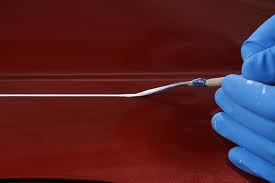
Mechanical pin striping is the best way to stripe larger vehicles- trucks, vans, or station wagons. The benefit is it lays down stripes of constant width, letting you focus attention on getting the stripe oriented properly along your working surface. You can set up your stripe lines using magnetic pinstriping strips with middle grooves designed to be paint templates. They hold fast to steel surfaces, and can also work as guidea for your hand.
Pinstripes are often painted in colors: that sets off the body color, and another, narrow line, in a color contrasted with the stripe to make it stand out.
Freehand pinstriping is the most difficult process, requiring the most practice to master, but permits unrestricted creativity. The simplest plan for a freehand striping beginner is to lay a strip of masking tape down about a quarter inch from where you require the completed line to be, and then use this tape as visual guiding for your stripes. Whatever you do, don't use regular masking tape, or your pinstriping paint will bleed under the edge. Get some auto body masking tape from an auto supply store.
Striping with stencil tape is also popular. There's several types of stencil tape that are suitable for auto pinstriping applications. Stencil tape striping makes use of brushes, and a specialized pinstriping brush is an essential ingredient in a successful project. Stencil tape lets you apply different color stripes without needing the other stripes to dry.
No matter what process you use, pinstriping is of the finest ways to make your vehicle unique. like anything else worth doing right, practice makes priceless results but having the best equipment you can get your hands on helps .

Friday, May 18, 2012

Customizing Your Car Pinstriping


Car Pinstriping
Did you know pinstriping has a long history? Even before the invention of cars, pinstriping was used as an ornamental decoration for horse and buggy carriages.

Custom pinstripes began seeming on cars in the mid-1950s. Although pinstriping had been on cars long before that, the last American automobile to appear with auto pinstriping had been made by General Motors in the late 30’s. For those individuals with muscle or sports cars, personalizing their ride is an important part of possessing and showcasing the vehicle, and pinstriping is a final touch.

Pinstripes are commonly painted in two colors: one that sets off the body color, and another, thin line, in a color counterpointed with the stripe to make it stand out.

Mechanical pin striping is the best way to stripe larger vehicles- trucks, vans, or station wagons. The benefit is it lays down stripes of constant width, letting you focus attention on getting the stripe oriented properly along your working surface. You can set up your stripe lines using magnetic pinstriping strips with center grooves designed to be paint templates. They hold fast to steel surfaces, and can also work as guidea for your hand.

Striping with stencil tape is also popular. There are various types of stencil tape that are suitable for auto pinstriping applications. Stencil tape striping uses brushes, and a specialized pinstriping brush is an essential component in a successful project. Stencil tape allows you to apply different color stripes without needing the other stripes to dry.

Freehand pinstriping is the most difficult technique, requiring the most practice to master, but permits unrestricted creativity. The simplest plan for a freehand striping newbie is to lay a strip of masking tape down approximately a quarter inch from where you want the finished line to be, and then use this tape as visual guiding for your stripes. Whatever you do, do not use regular masking tape, or your pinstriping paint will bleed under the edge. Get some auto body masking tape from an auto supply store.

No matter what technique you use, pinstriping is one of the finest ways to make your vehicle distinctive. Just like anything else worth doing right, practice makes priceless results but having the best equipment you can get your hands on helps too.

Monday, May 14, 2012

How To Beat Dirt Bike Jumps


Dirt Bike Jumps
If you ever want to ride on a motocross track you're going to have to learn to beat the dirt bike jumps. At first they are a very scaring affair, and riding at them with any pace looks almost suicidal but to get anywhere in dirt bike racing you need to face them and you need to beat them otherwise you will not get anywhere and you will not have any success. When you first start dirt bike racing you will be lucky to get a couple or feet of air and stay upright when you land, but this will all change when you have a little experience and a little knowledge behind you. The only real trick to being any good over dirt bike jumps is to practice and keep practicing.

The best way to beat dirt bike jumps.

It is true that there are no quick fixes to beat dirt bike jumps and the real key to success is to practice and keep practicing. However, there are some basic guidelines that will increase you chance of success and it is these guidelines you should be practicing.

Firstly, you posture should be that of a standing up position but crouched slightly and gripping the bike with your legs; if you do not grip with your legs you and the bike are likely to become separated and this will ensure that you can land relatively comfortably in a sitting position. It also stops the bike from kicking out sideways if you hit a bump on the way up the ramp.

As you approach the ramp you should know pretty much exactly where you want to be on the up ramp; finding the line on the ramp and keeping an even throttle all the way up. Again, this will mean less chance of the bike jumping if you hit a bump or a rock.

If you want to land with your bike upright and you on the seat, then when you have got air you need to be looking where you are going to land and amend your bike position accordingly so if you are landing on the flat lift your handle bars before you hit the ground; this way your rear wheel will make contact first and will take most of the pressure of the landing. If, however, you are landing on the down slope then you need your bike to be at the same angle as the slope. To alter your bike’s position, you can either rev while in the air which will drop the rear of your bike or you can let up on the clutch and apply the back brakes giving the opposite effect.

The second before you land get straight onto your clutch, the revs will help your rear suspension take the blow and will give you good speed on landing. One of the hardest things about dirt bike jumps is having the confidence to pull it off. If you are confident then you will stand more chance of doing everything as well as you can so practice and practice hard; do not get too carried away at first though, just take it at your own pace.

Finding Great Car Accessories

Car Accessories
A car accessory is something you add to your car to make it look better and to add some style. Many people want a cool car accessory to accent their car. A car accessory can make your car look great. A car accessory can help you to personalize your car. Whatever your reason may be for buying a car accessory, you will surely enjoy doing it.


Car Stickers
A car accessory can often be high-priced. But before we get into that kind of a car accessory, let's start with the cheaper ones. A cheap car accessory that many people enjoy is stickers. This car accessory can be a funny statement, a social cause, or an achievement. Another cheap car accessory is bobble heads. They are often of famed people or silly animals. These are always funny to look at.

Car Floor Mats
A car accessory is sometimes a necessary thing. An example of this kind of a car accessory is floor mats. Floor mats can either be plain colorful or have a catchy design. Another often needed car accessory is air fresheners. As you know, cars can get smelly. Many people find this car accessory to be a blessing.


XBOX
Now we'll move on to the more expensive kind of car accessory. This type of car accessory is often electronic in nature. An electronic car accessory can be a blacklight, neon headlights, CD player, or even a DVD player to keep the kids quiet while you are trying top drive. A similar car accessory would be to add a playstation or an Xbox to your car with a television unit to play on. This car accessory is not recommended because it can be ever so troubling to the driver.


Another expensive, yet sometimes necessary car accessory is an in dash GPS (global positioning system). A GPS helps many drivers get to and from various locations. It is kind of like an onboard automated map. A GPS can cost you between $500 and $1500 so you must decide on if you really need it.


Car Radar Detector
Another example of an expensive car accessory is a radar detector. This helps drivers know when a police officer may be nearby looking for speeding cars. A radar detector alerts you so you can slow down and avoid a speeding ticket. A radar detector is not really needed unless you are the type of person who likes to speed.

Whether you want a car accessory to better personalize your car or to help you avoid speeding tickets, you'll surely have a bunch to choose from. Take your time and seek out the one that is best for you. There are a lot of places to go for car accessories. Have fun and enjoy yourself while you shop.

Wednesday, May 9, 2012

Dirt Bike Racing


Dirt Bike Racing
What’s so beneficial about dirt bike racing?

The adrenalin is coursing, heart beat racing and blood pumping; the dirt bike racing is about to begin. As far as adrenalin fuelled sports go, you don’t get much more action packed than dirt bike racing. It is fast, and to coin a well-used phrase, it is furious. People from age 4 to age 64 love the thrill and regularly get involved in dirt bike racing. 


What should I consider when dirt bike racing?

First and foremost, you should consider your safety. The very nature of dirt bike racing as a sport means it is dangerous and it is even more dangerous if you do not take it seriously. Any reputable dirt bake track will not let you on if you do not have a helmet, goggles, a jersey, pants, chest protector and in some cases a neck protector. You should always pick gear that fits because if it does not fit it Is not safe.

Dirt bike riders don’t appreciate people who ride recklessly, and if you are a reckless rider you will undoubtedly get an ear bashing for your dangerous behaviour and quite possibly kicked off the track. Dirt biking is one of the most dangerous sports in the world, but taking it seriously and following all the proper safety rules will help you make the most of it.

The bike also plays a serious part (obviously) and when you're selecting a dirt bike either for yourself or for your children you had better always make sure that the rider can sit on the bike with their feet touching the floor and legs bent slightly. If the bike is too big there is no way you can have total control and the same can be said if it is too small.

Also, think how good you are. The more experienced you become as a rider the better you become. Do not try getting air of incredible heights until you really know what you are doing. Beginners should be happy with a foot or two of air; the riders you see on TV who are climbing up to ten feet have been riding for years and years to be able to do that.

As a beginner you'll probably find a line you are happy with and stick to it. While this is unlikely to win you any big races, it will give you chance to hone your skills and gain confidence. Once you are a bit more experienced you will be able to take different lines to overtake people and win races.

Dirt bike racing is not something you can just throw yourself into. It takes great deal of practise to become any good and you should never try anything you aren’t confident with. If you stick to this and find yourself a reputable track then you will not go far wrong.